Allison Healy
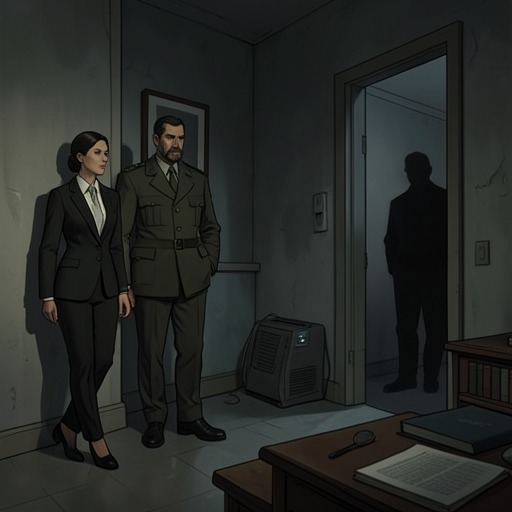
Heart of the HunterAllison Healy is a Cape Times crime reporter whose pursuit of the story of Thobela Mpayipheli carries her from routine deadline work into a consequential conflict between publication and discretion. She begins as a young journalist inclined to trust the people she meets; as the fugitive’s story unfolds, she becomes increasingly alert to the gap between the official pursuit and the friend Mpayipheli is trying to help. Her reporting brings her into contact with Miriam Nzululwazi and Dr Zatopek van Heerden, and her eventual decision to withhold and delete information marks a decisive change in how she understands her work.
Identity and Early Disposition
Before the Mpayipheli story, Healy is a crime reporter at the Cape Times with an idealistic picture of a writing life. A graduate of Rhodes University’s school of journalism, she had imagined working for Cosmo or Fair Lady and regarded daily newspaper work as an apprenticeship. When she entered the newsroom, she trusted people, believed what they told her, and looked on the famous figures she encountered with wide-eyed interest. The account presents this openness as part of her early professional character, not simply as a lack of experience: she is drawn to stories and people before she has learned to keep them at a distance.
The novel also identifies a more complicated faculty beneath that trusting manner. Healy has spent years noticing how she can be among a group while feeling apart from it. She has examined that distance repeatedly and concluded that it is simply how her mind is put together. Though she experiences it as an uncomfortable separation, it gives her an observer’s advantage: she can see what others overlook. That inward sense of not quite belonging becomes an important counterpoint to her early willingness to accept people at face value. Her reporting grows more perceptive not because she ceases to be emotionally involved, but because she can recognize the distance between what a group says and what its members may fail to see.
The Call and the Emerging Story
A late Sunday-night phone call from a policeman she remembers from the Sea Point office, known as Rassie, redirects her life. Their exchange begins familiarly and lightly, but his tone changes and he tells her that he has a story. The call is described as a turning point before its consequences are clear. Healy writes the account immediately, although the official deadline has already passed. The speed of that response establishes her as a reporter willing to act on a lead rather than wait for a more convenient moment.
The story brings her into the public account of the manhunt for Mpayipheli. A newspaper headline casts him as the big, bad BMW biker sought by the intelligence services, and Healy’s byline makes her the reporter associated with the saga. Yet the pursuit itself troubles her: she thinks about the motorcyclist speeding through the night, hunted by law-enforcement and intelligence officers, and asks herself why. That question marks a change in emphasis. The story is no longer only an arrest or pursuit to report; the reasons for the extraordinary attention become part of what she needs to understand.
Her work takes her from news copy to direct contact with people close to Mpayipheli. After Immanuel introduces himself to her as a shoeshine man, Healy uses a phone book to locate Miriam Nzululwazi and calls her. It takes nearly fifteen minutes to persuade Miriam that she is on Mpayipheli’s side. Miriam remains guarded and gives few answers, but eventually explains that he is helping a friend and objects to what is being done to him. Healy’s persistence does not make the interview an easy exchange; rather, it shows that access depends on overcoming Miriam’s understandable suspicion of a reporter approaching her amid the pursuit.
The story also moves into broadcast media. Healy joins a radio programme as the crime reporter from a Cape Town newspaper who broke the story of the big, bad Xhosa biker. That introduction confirms how quickly her reporting has become a public frame through which listeners encounter Mpayipheli. The distance between the headline’s simplified figure and Miriam’s explanation—that he is helping a friend—sharpens the ethical problem embedded in Healy’s growing prominence: the story that establishes her reputation can also reduce its subject to a pursuit label.
Reporting, Trust, and Van Heerden
Healy’s reporting brings her to Dr Zatopek van Heerden. On the veranda of a small white house with a green roof, she sits opposite him and is captivated by his intensity and by something she recognizes without yet being able to name. She says that she wants the truth. Van Heerden, however, sets a condition: he does not want to be on the record. Healy accepts the condition, then asks how well Mpayipheli was trained as a soldier. The questions show her trying to understand the person behind the chase, while the off-record boundary makes clear that access to the truth is not the same as permission to publish every answer.
Their encounter has a personal dimension as well as a professional one. Healy recognizes in Van Heerden a kind of separateness like her own: she thinks of two people who have detected one another among those who seem more at home in the world. The recognition makes their closeness intelligible without erasing the difference between them. Later, seated opposite him on the veranda, she is absorbed by his presence; elsewhere she tells him that there is something he has said she does not understand. Their conversations therefore involve both attraction and unresolved questions. Healy’s attention to him does not replace her attention to the story, but it makes the boundary between reporter and participant more difficult to maintain.
That difficulty appears in small, revealing moments. Before starting her car, Healy lights a cigarette and watches the smoke disperse against the windscreen. Later she wakes briefly before dawn with the conviction that withholding information he had given her was the best decision of her life. The evidence does not identify that information, but it makes the choice and its weight explicit. She is no longer treating every piece of access as material to be converted into copy; restraint itself has become part of her professional judgment.
Publication, Restraint, and the Final Journey
Near the end of the story, Healy works intensely at her keyboard, her passion visible in the words she is writing. As she reviews the copy, she has to suppress the impulse to describe Van Heerden with an angry insult. The moment links emotional strain to editorial work: what she feels threatens to enter the article, and she recognizes the need to control how her private reaction becomes public language. A phone call from Van Heerden then changes the immediate course of events. He asks whether she has a passport, and she responds with surprise.
Van Heerden directs her by cellphone along an obscure route at Cape Town International Airport, behind hangars and office buildings and between rows of small aircraft. She eventually finds a Beechcraft King Air ambulance with its engines already running. On the way, she has nearly submitted her article: she had reached the editorial-office door, turned back, and run to delete it. That reversal gives her decision concrete form. Publication had been close enough to seem completed; instead, she returns to the copy and removes it.
Healy remains in the aircraft as people approach with a stretcher. She wonders what Mpayipheli looks like, measuring the public descriptions of him—assassin, drug soldier—against the man for whom Miriam had wept and who had crossed two thousand kilometres to do a friend a favour. The contrast does not erase the danger or the labels; it shows how those labels fail to contain the act of loyalty she has learned about. Her attention has shifted from the spectacle of a fugitive escaping pursuit to the human purpose that makes his journey legible to her.
Afterward, Healy follows a woman driving out of the Wale Street Chambers parking garage, with Mpayipheli lying flat on the rear seat. She and the driver move through Cape Town and onto the N1, keeping several car lengths behind. At Van Heerden’s kitchen table, the story reaches a strikingly domestic image: at Mpayipheli’s request, Van Heerden has made coq au vin in the traditional Provençal manner, with golden couscous alongside it. Healy is present with the two men in a scene described as happy and domestic. The meal sets ordinary hospitality against the pursuit and public alarm that have governed the preceding journey.
Narrative Role
Healy serves as the novel’s working journalist and as a changing point of contact between the public story of Mpayipheli and the relationships that story threatens to flatten. Her first article and later broadcast help define him for a wider audience, but her questions, interview with Miriam, and encounters with Van Heerden complicate that framing. She begins with a reporter’s eagerness to believe and publish; she ends this arc having deleted an article and chosen not to disclose information entrusted to her. The change is not a rejection of journalism. It is a recognition that reporting carries obligations beyond getting a story into print, especially when the person at its centre is being pursued and reduced to a headline.
Her outsider’s perspective connects this professional change to her private character. Because she knows the feeling of standing apart while appearing to belong, she is unusually receptive to the distance between public categories and individual lives. The novel makes that perceptiveness consequential: Healy moves from documenting the chase to helping preserve the conditions under which its central figure can be seen as more than the names attached to him. Her final proximity to Mpayipheli and the shared meal at Van Heerden’s home do not resolve every danger or question, but they replace the newspaper’s public spectacle with a brief scene of trust, care, and ordinary company.